Published ; updated
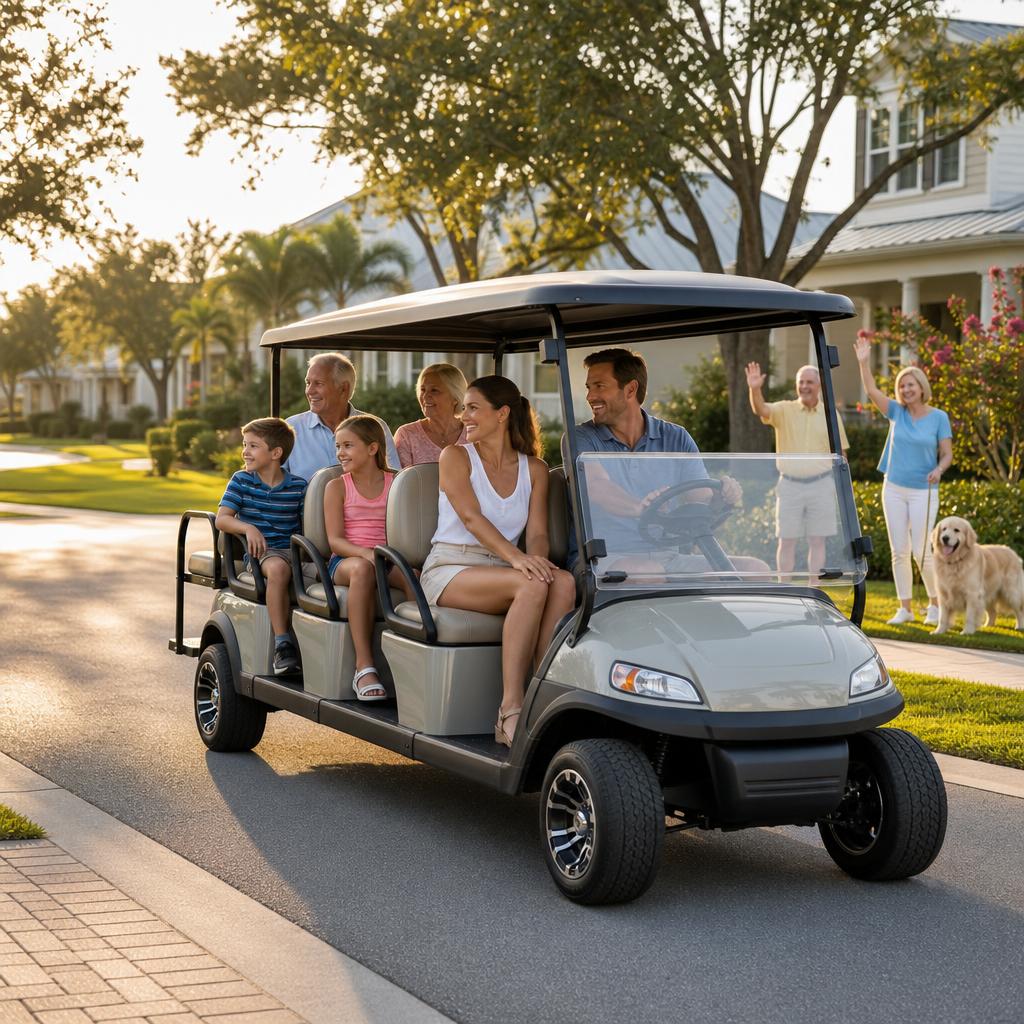
The Best Personal Transportation Vehicles for Neighborhood Communities
A neighborhood PTV should serve the community’s actual roads and residents rather than a generic idea of a golf cart. Start with approved routes, traffic patterns, parking, weather, household loads, and the community’s rules for charging, storage, and shared use.
Map community use
Identify trips to amenities, mail areas, pools, shops, transit, and neighboring streets. Separate private roads from public roads and crossings. Confirm current state and local requirements for the exact vehicle class with the proper authorities, and ask insurers about resident or association use.
Choose capacity and access thoughtfully
A four-passenger layout may suit many households, while a two-passenger model can be easier to park and a utility bed may support maintenance teams. Check seat-belt positions, entry height, handholds, legroom, mobility equipment access, payload, and storage. Do not exceed the manufacturer’s load limits.
Design for shared expectations
- Post approved routes, parking, charging, speed, and passenger policies.
- Define who may drive, where children may ride, and how cargo is secured.
- Set inspection, battery-charging, cleaning, and seasonal-storage responsibilities.
- Choose lighting, mirrors, belts, visibility, weather protection, and tires for the environment.
- Keep an incident and maintenance process without making unsupported safety promises.
Plan charging and service
A shared or residential parking area may need dedicated circuits, weather protection, cord management, and clear responsibility for charging. Battery life and range vary with use, load, temperature, terrain, and age. Confirm the charger, outlet, and service plan before delivery, especially for a community fleet.
Choose support that scales
Ask for fleet pricing only after comparing warranty, replacement parts, technician response, inspection records, downtime, and training. A community’s best PTV may be the model with consistent parts and simple service, not the one with the longest accessory list.