Published ; updated
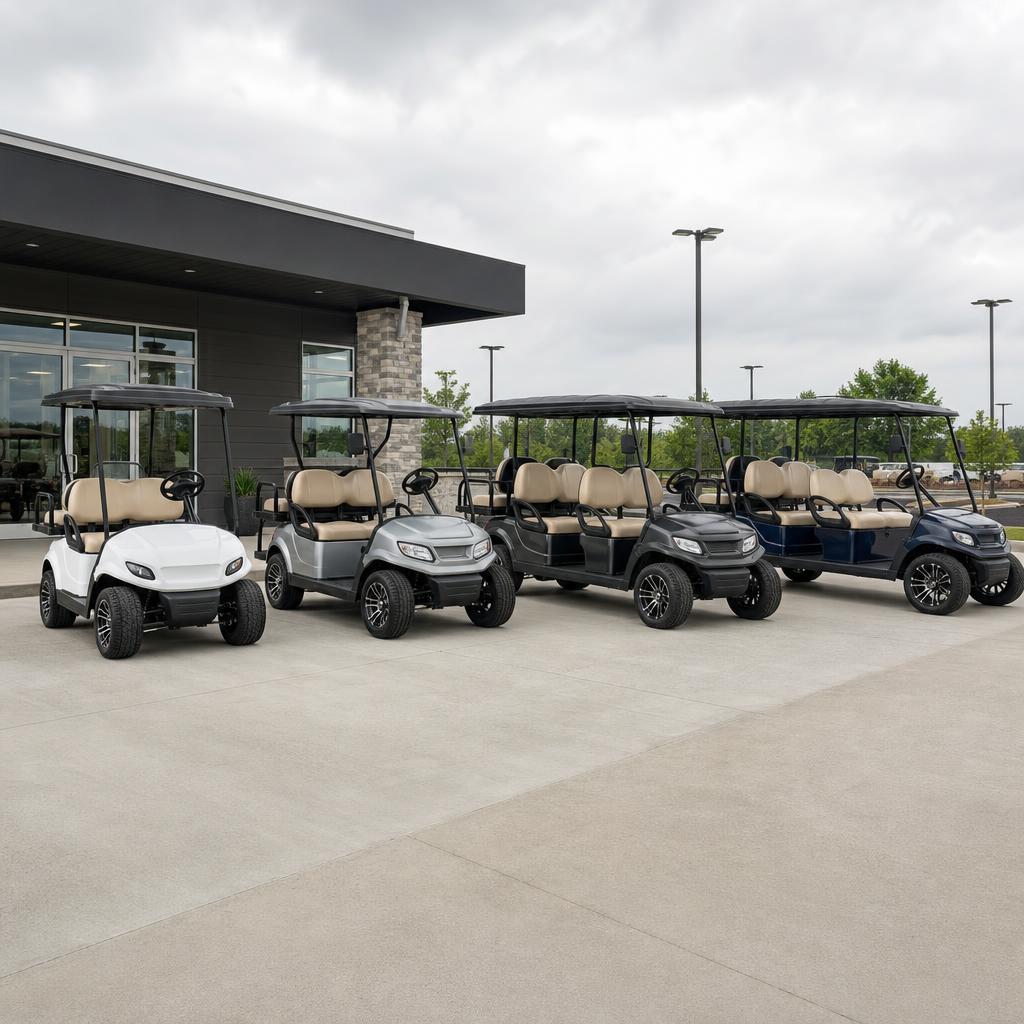
Two-, Four-, Six-, and Eight-Passenger Personal Transportation Vehicles
Seat count is a useful starting point, but it is not the whole capacity story. Longer passenger PTVs may need more turning space and charge capacity, while a shorter model may be easier to store. Compare the full load, route, and footprint before choosing a number.
Two-passenger models
Two seats suit couples, solo errands, maintenance rounds, and tight properties. They can leave room for a useful cargo bed or make parking simple. Check whether the shorter body still offers the storage, weather protection, and payload needed for the day.
Four-passenger models
Four seats often balance household use and maneuverability, but rear-facing seats can change entry, cargo, and visibility. Check belt positions, legroom, footwell, rear access, total payload, and how groceries or mobility equipment are secured.
Six- and eight-passenger models
Larger models can reduce trips for campuses, resorts, events, and communities. Their length, turning radius, weight, stopping behavior, and charging demand may also increase. Verify gates, parking, grades, surface, bridges, and route permissions with a full passenger load.
Capacity is a specification, not a guess
- Compare total passenger and payload ratings, not just the number of seats.
- Measure each rider’s entry, legroom, handhold, belt, and mobility needs.
- Check cargo space, restraints, towing, turning circle, width, length, and storage.
- Ask how passengers, hills, temperature, tires, and accessories affect usable range.
- Test braking, steering, visibility, charging, and parking with a representative load.
Choose the smallest vehicle that does the job
A larger vehicle is worthwhile when the regular route and load need it. Buying for a rare maximum can add cost and complexity every day. If public roads are involved, confirm the exact class and current state and local rules; an eight-seat golf cart shape does not create blanket road permission.