Published ; updated
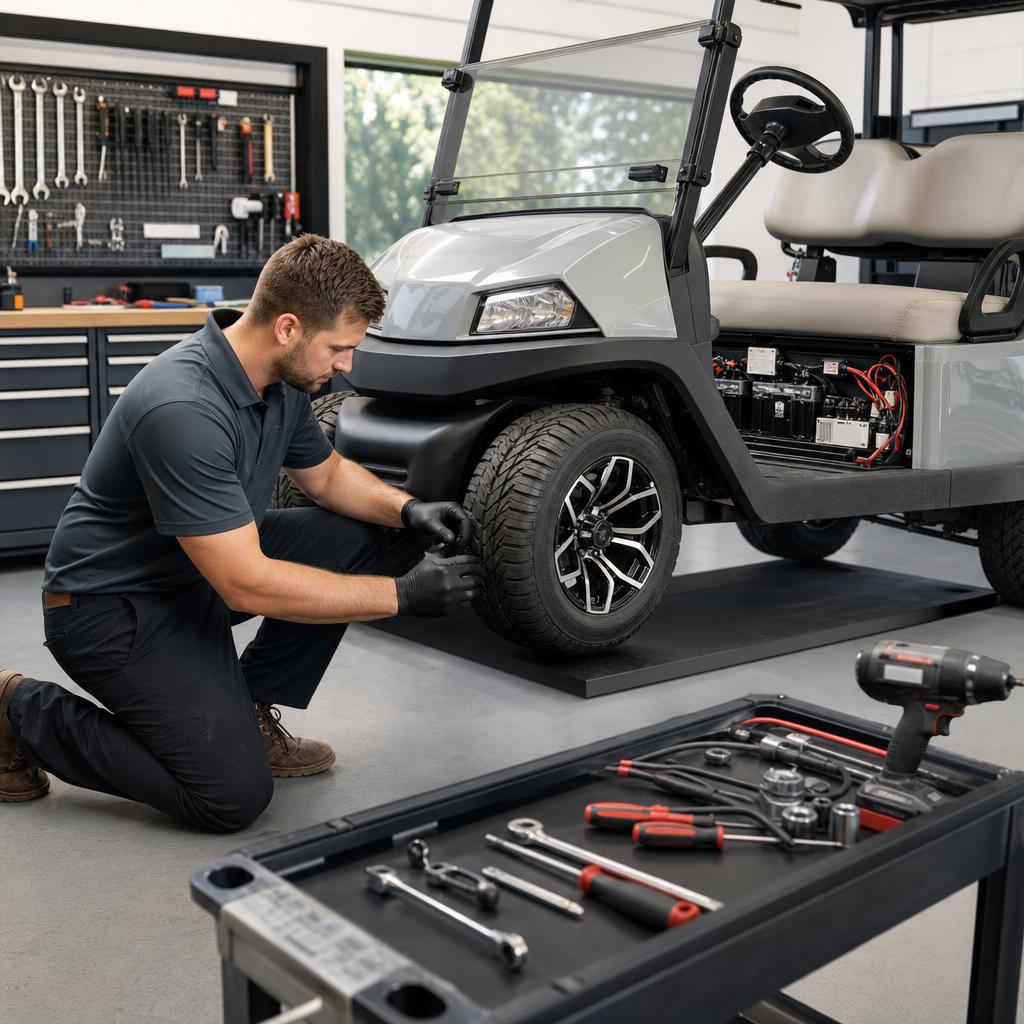
Personal Transportation Vehicle Maintenance: A Complete Checklist
Maintenance should follow the owner’s manual, model, battery, climate, load, and use. The checklist below helps organize a conversation with a qualified technician; it does not replace manufacturer instructions or a required inspection.
Before each trip
- Check tire condition and pressure, visible leaks, loose parts, and battery or charging damage.
- Test steering, accelerator return, service brake, parking brake, direction selector, horn, lights, mirrors, and belts.
- Confirm cargo is secure, seats are latched, and the charge level suits the route with reserve.
- Look for obstructions, unusual sounds, warning messages, or changes in handling.
Battery and charging routine
Use the supplied or approved charger and follow its connection, ventilation, temperature, and storage instructions. Flooded lead-acid systems may require water and terminal checks; lithium systems have different limits and diagnostics. Record charge behavior and have unusual heat, odor, swelling, damage, or repeated faults inspected promptly.
Periodic service items
- Inspect brakes, cables or hydraulics, steering, suspension, wheel fasteners, and tires.
- Check chassis, roof, seats, belts, glazing, mirrors, lights, wiring, and weather seals.
- Clean battery areas and connectors according to the manual; avoid directing water into electrical components.
- Review charger operation, battery capacity changes, software or controller faults, and corrosion.
- Service or replace components at the manufacturer’s time, use, or condition intervals.
Keep a useful record
Record date, hours or distance, charging observations, inspections, repairs, battery work, tires, brakes, modifications, and technician notes. Records support warranty conversations and reveal patterns before they become route failures. Use qualified service for brakes, high-current electrical systems, structural work, and uncertain faults.
Maintenance and road use
A well-maintained golf cart or PTV is not automatically permitted on public roads. Continue to verify vehicle classification, equipment, registration, and current state and local rules, plus insurance requirements. Modifications should be documented because they can affect service, handling, capacity, range, and compliance.