Published ; updated
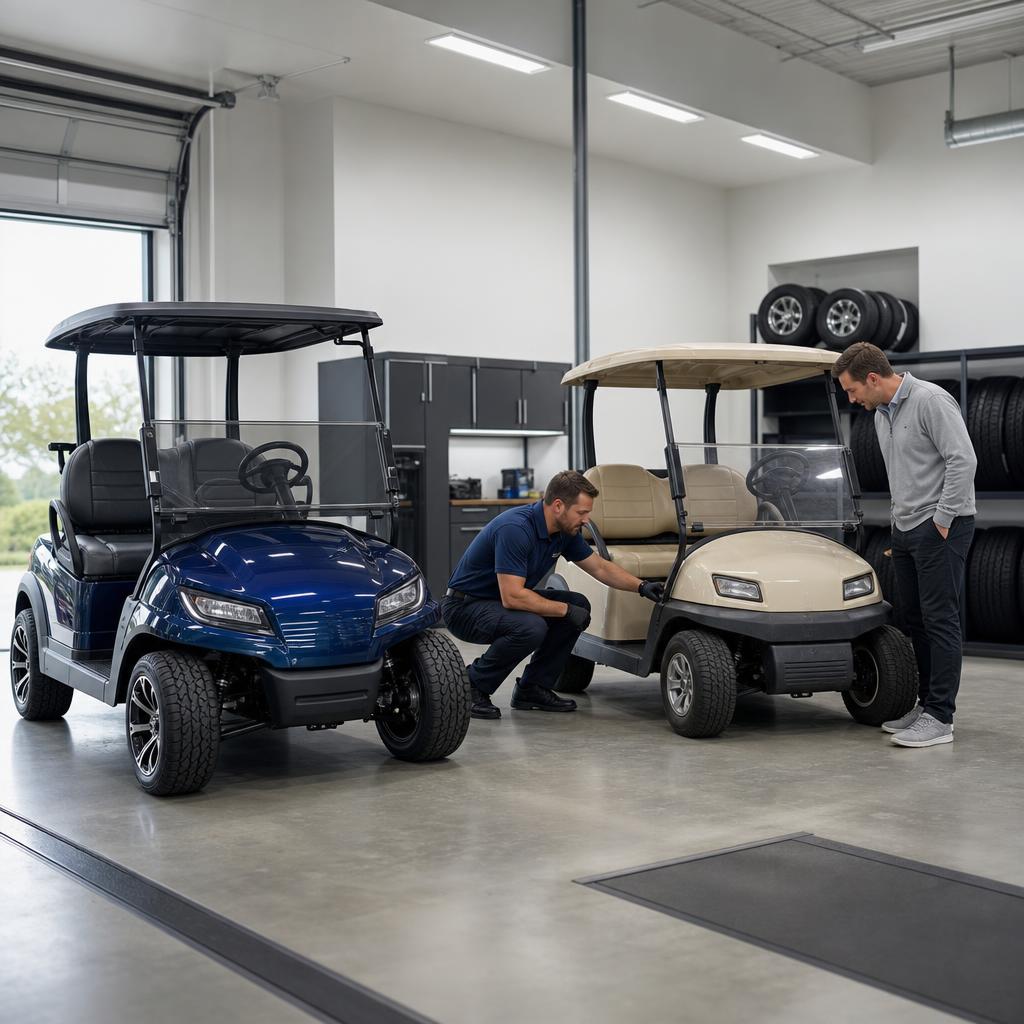
New vs. Used Personal Transportation Vehicles: Which Is Better?
New is not automatically better and used is not automatically cheaper. The right choice depends on battery condition, route equipment, maintenance records, warranty, financing, and the dealer or technician available after delivery. Compare the total risk and usefulness, not only the sticker price.
Reasons to consider new
A new PTV may offer current battery technology, a clear warranty, known configuration, fresh tires and brakes, and fewer unknown modifications. It can also be ordered around your seating, cargo, weather, and charging needs. Confirm what the warranty covers and whether accessories or commercial use change its terms.
Reasons a used vehicle can work
A carefully documented used PTV may suit a private property, short route, or limited budget. Its value depends heavily on battery age and care, hours or mileage records, charger condition, corrosion, tires, brakes, steering, and prior modifications. Ask why it is being sold and who serviced it.
Battery and modification inspection
- Record battery chemistry, date codes, maintenance, charge behavior, and remaining warranty.
- Inspect terminals, cables, charger, controller, motor, suspension, tires, brakes, steering, and frame.
- Identify lifts, speed changes, nonstandard seats, wiring, controllers, lights, and tire sizes.
- Ask how each modification affects payload, range, handling, road classification, and warranty.
- Have an independent qualified technician inspect a used vehicle before payment.
Compare the total purchase
For either option, add delivery, taxes, registration, equipment, charger work, insurance, service, tires, brakes, storage, financing, and likely battery work. A used PTV needing a battery and charger may approach the cost of a better-supported new model. Conversely, a new vehicle with costly options may not be necessary for a private route.
Confirm legality and support
Ask for the exact vehicle documents and confirm current road rules with state and local authorities. A used golf cart’s previous use does not establish present road permission. Make sure a local shop can diagnose the model and that replacement parts are available.